OVER 50 YEARS★ LOCALLY OWNED ★SINCE1973
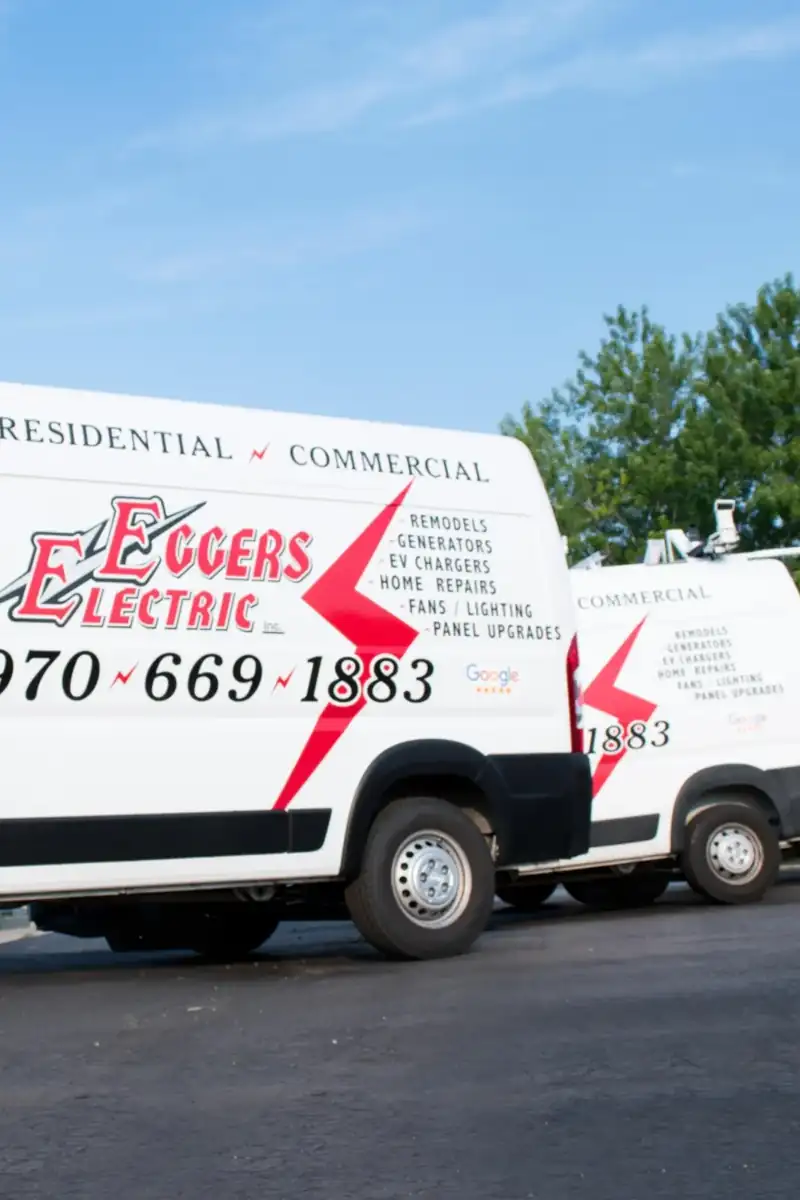
Eggers Electric service vans parked at the Loveland shop

Generator options. Portable vs. standby.

Which generator is right for you? Here is a guide to help you decide, from the electricians who size and install both.

Every visit includes the repair, installation or service you called us for, plus the $89 Eggers Safety Inspection. You get a written price before every job.

Call 970-669-1883
“Eggers provided the most competitive rate by a wide margin.”
Google review · Fort Collins · Jun 2025 Repairs & troubleshooting
Call 7 days, 7am–8pm

Schedule service or ask a question

Ask a questionWe’ll follow up Call 970-669-1883
Call 7 days, 7am–8pm
Same-day appointments may be available, depending on our schedule.

Quick summary

Portable

  • Lower cost
  • manual start
  • essential circuits

Standby (whole-home)

  • Automatic
  • higher capacity
  • whole-home capable

Portable generators

Generator, accessories and professional electrical installation included.

What it can typically power

  • Furnace
  • Refrigerator & freezer
  • Garage door opener
  • Internet & outlets
  • Select lighting circuits

What it typically will not power

  • Electric range
  • Electric water heater
  • Central A/C units
  • Electric furnace
  • Large simultaneous 240V loads

Pros

  • Lower upfront investment
  • Reliable long-term solution when professionally installed
  • Safe, permanent electrical connection (no extension cords)
  • Covers essential home systems
  • Homeowner training included

Considerations

  • Manual start required (you must be home)
  • Fuel planning needed for extended outages
  • Louder than standby generators
  • Powers selected circuits, not the entire home

Best fit for

  • Homeowners wanting a lower-cost backup option
  • Customers comfortable with manual operation
  • Homes needing essential circuit coverage
  • Reliable backup without full automation

Standby (whole-home) generators

Generator, permits, accessories and professional installation included.

What it can typically power

  • Selected circuits or the entire house
  • HVAC systems
  • Well pumps
  • Refrigeration, lighting & appliances
  • Electronics

Pros

  • Fully automatic operation
  • Higher power capacity
  • Permanent installation with automatic transfer switch
  • Runs on natural gas or propane
  • Quieter residential operation
  • Seamless backup power during extended outages

Considerations

  • Higher upfront investment
  • Longer installation timeline due to permits
  • Load management may still be used for efficiency

Best fit for

  • Homeowners wanting automatic, hands-off backup power
  • Families with medical, work-from-home or comfort needs
  • Homes with frequent or long outages
  • Customers prioritizing convenience and full-home coverage

A simple comparison

Think of generators like basketball hoops. A portable generator is like a portable basketball hoop: affordable, effective and right for many families’ needs. A standby generator is like a permanently installed hoop: always ready, more powerful and built for maximum convenience.

Both work. The right choice depends on how much power you need, how often outages occur, and how hands-off you want the experience to be. Eggers Electric will help you size the right solution for your home.

Generator sizing: electrical loads vs. square footage

Home size alone doesn't determine generator size. Sizing is based on electrical loads: what you want to power, how much electricity those systems use, and whether they have high starting demands. Generator size is determined by what you want to run, not how big your home is.

Example A: larger home, lower electrical load

  • 1,600 sq ft home
  • Gas furnace, gas stove, gas water heater
  • Minimal electric heating: typically requires less generator capacity

Example B: smaller home, higher electrical load

  • 1,200 sq ft home
  • Electric heat or heat pump
  • Electric water heater, EV charger or well pump: typically requires more generator capacity

How a portable generator is stored and used

Portable generators are stored in a garage or shed when not in use. They are never run indoors or inside the home. What happens during an outage:

  1. Roll the generator outside to a safe, ventilated location.
  2. Plug into a professionally installed generator inlet box.
  3. Engage the transfer switch or interlock.
  4. Power selected circuits safely.

Eggers Electric installs inlet boxes and transfer equipment so power is distributed safely, without extension cords or dangerous backfeeding. Installed correctly, a portable generator is a long-term solution, not a temporary or DIY setup.

Generator backup vs. battery backup

Generator backup is designed for extended outages, can power high-demand systems, refuels (natural gas, propane or gasoline) and is ideal for multi-day outages and whole-home needs.

Batteries are great for short, quiet backup. Generators are better for long outages and heavy electrical loads.

Generator fuel types: pros and cons

Natural gas

  • Continuous fuel supply
  • No refueling
  • Ideal for standby generators

Natural gas: watch for

  • Requires gas service availability

Propane

  • Long shelf life
  • Works well for standby systems
  • Flexible tank sizing

Propane: watch for

  • Runtime depends on tank size

Gasoline

  • Common for portable generators
  • Widely available
  • Requires storage and refueling

Gasoline: watch for

  • Shorter shelf life

Dual-fuel

  • Can run on gasoline or propane
  • Flexible during outages

Dual-fuel: watch for

  • Slightly more maintenance considerations

Common generator questions

Questions? Call 970-669-1883 or email info@eggerselectric.com.

Portable vs standby: what's the simplest way to choose?
Choose a portable generator if you want a lower-cost backup for essentials and are comfortable with manual setup. Choose a standby generator if you want automatic, whole-home or near whole-home backup that runs without manual involvement.
What can a portable generator typically power?
Typically essential circuits such as the furnace blower, refrigerator/freezer, some lights, outlets, garage door opener and internet, depending on generator size and circuit selection.
What can a standby generator typically power?
Typically selected circuits or most or all of the home, including HVAC, well pumps and major appliances, depending on generator size and load management.
Does square footage determine generator size?
No. Generator sizing is based on electrical loads, not square footage alone.
How do you size a generator correctly?
Sizing is based on your appliances, starting surge loads, and whether you want whole-home or essential coverage.
Where do I store a portable generator and how does it connect?
It's stored in a garage or shed and rolled outside during outages. It connects through an inlet box tied to a transfer switch or interlock.
Do I need a transfer switch or interlock?
Yes. They prevent dangerous backfeed and are required for safe operation.
What fuel options do generators use?
Standby generators typically use natural gas or propane. Portable generators use gasoline, propane or dual-fuel.
Generator vs battery backup?
Batteries are best for short outages. Generators are better for long outages and high loads.
What maintenance is required?
Standby: scheduled service, oil and battery checks. Portable: oil changes, fuel stabilization and test runs.
Why choose Eggers Electric?
Eggers Electric provides professional sizing, installation and permitting, tailored to each home's actual needs. Locally owned in Loveland since 1973.

Good to know

Capabilities vary by home, generator size, fuel type and selected circuits. Final recommendations are based on an on-site evaluation. Powering results are typical examples; actual results vary by generator size, selected circuits, starting loads and home configuration. See generator installation.

Get in touch

Not sure which option is right? Call 970-669-1883 or send a message.

What our neighbors say

400+ Google reviews
“My family has been a customer of Eggers Electric for four generations. There is nothing better than to have a family-owned local company provide quality, friendly service in the community. It makes a difference in the work and in understanding the needs of individual homes…”
Google reviewRepairs & troubleshooting
  • “Our tech Clint was courteous and professional and was able to come out the day after our call. More importantly he fixed the problem!…”
    Google review · Fort Collins · Oct 2025 Repairs & troubleshooting
  • “Eggers Electricians Brandon and Andy were professional, efficient, kind, polite and job knowledgeable…”
    Google review · Fort Collins · Oct 2025 Fans & lighting
  • “I had Andy update my smoke alarms and combo carbon monoxide/smoke alarms in my house. He was very professional, answered all of my questions and he did an excellent job!…”
    Google review · Loveland · Sep 2026 Wiring, outlets & upgrades

  • BBB Accredited Business, A+ rating
  • Eggers Electric Google reviews
  • 2024 Quality Business Awards winner
  • 2023 NoCo Style Readers’ Choice winner
  • Eggers Electric on Yelp
Map showing Eggers Electric at 3520 W Eisenhower Blvd, Loveland, CO 80537
Eggers Electric3520 W Eisenhower Blvd, Loveland, CO 80537

Ready when you are

Locally owned since 1973. Call 970-669-1883, 7 days, 7am–8pm.

Schedule service onlinePick a day and time that works for you.
Loading available times…
Prefer to talk? Call 970-669-1883, 7 days a week, 7am–8pm.
Call 970-669-1883

Google 4.9 · 400+ reviews

Need an electrician?

Every visit includes the repair, installation or service you called for, plus an $89 Eggers Safety Inspection, credited toward your job.

Schedule Service

Have a question? Ask us

or call 970-669-1883 · Call 7 days, 7am–8pm

Ask a question

How can we help?

Send us a message and we’ll follow up. Need help now? Call 970-669-1883.